Facts that prove we know nothing about the Universe
2/9/2018
7,468 views
Find out about the most recent discoveries in astronomy that drew scientists closer to resolving the riddles of the Universe.
Owing to spaceships and space probes scientists get new data about the Universe and the Solar system every day.
#1 After all, it is more likely that life on Mars did exist
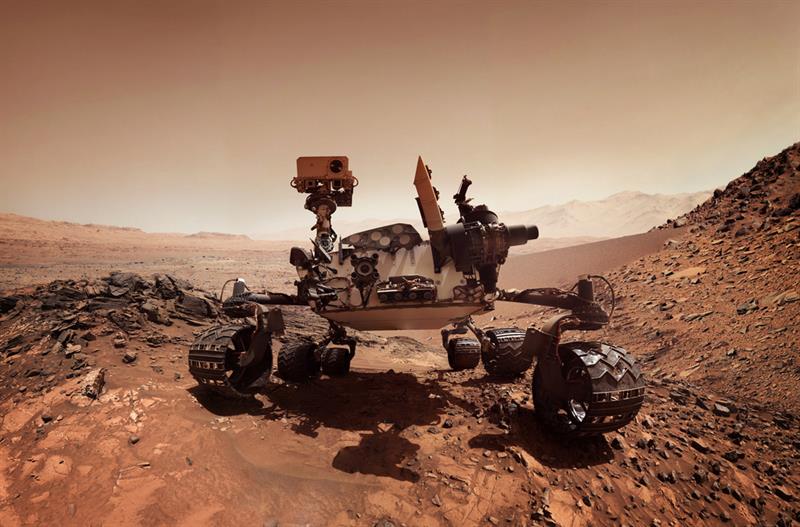
Restless Mars rover "Curiosity" found evidence of boron in the rocks of Martian Gale crater. Presence of this element indicates that water on the surface of our space neighbour was once suitable for life.
One of the sources of boron's appearance on Earth is warm pH-neutral underground water, that leaves special veinlets with this chemical element after drying out. This fact gave scientists another strong reason to search for the traces of life once existed on the red planet.
One of the sources of boron's appearance on Earth is warm pH-neutral underground water, that leaves special veinlets with this chemical element after drying out. This fact gave scientists another strong reason to search for the traces of life once existed on the red planet.
#2 Stephen Hawking launched an extraterrestrial life search programme
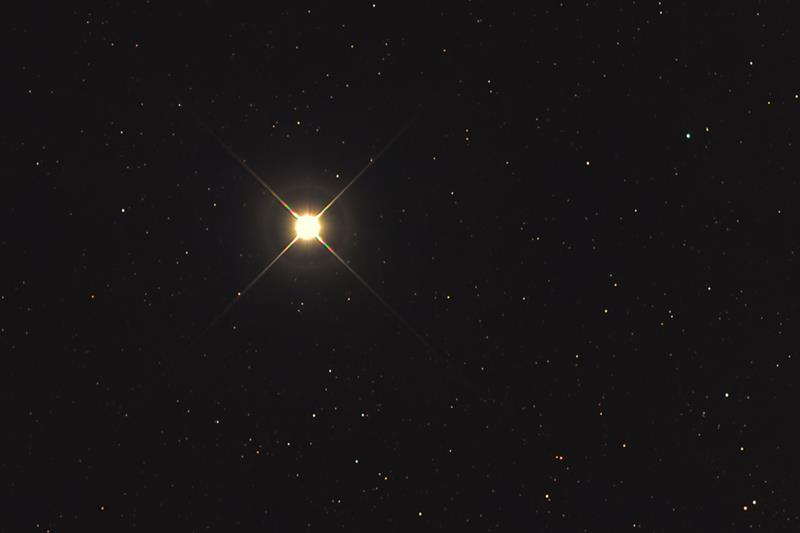
As part of this programme, a spacecraft is going to be built carrying about a thousand tiny spaceships that will explore habitable planets. The aim of the project is to reach Alpha Centauri, our nearest star system.
However, it's too soon to exult about interstellar flights. It will take several decades to build this spacecraft, since the project requires improvement of many space technologies existing today.
However, it's too soon to exult about interstellar flights. It will take several decades to build this spacecraft, since the project requires improvement of many space technologies existing today.
#3 Jupiter and Neptune attack Earth with comets

For more than 20 years scientists believed that due to its powerful gravity field Jupiter attracts comets and asteroids that happen to appear in the Solar system.
Yet the NASA scientists' research suggested that Jupiter and Neptune on the contrary, throw objects into inner part of the Solar system, where they can collide with Earth. Besides, it is allegedly Jupiter guilty of sending to our planet the well-known Chelyabinsk meteor.
Yet the NASA scientists' research suggested that Jupiter and Neptune on the contrary, throw objects into inner part of the Solar system, where they can collide with Earth. Besides, it is allegedly Jupiter guilty of sending to our planet the well-known Chelyabinsk meteor.
#4 Liquid water on Pluto
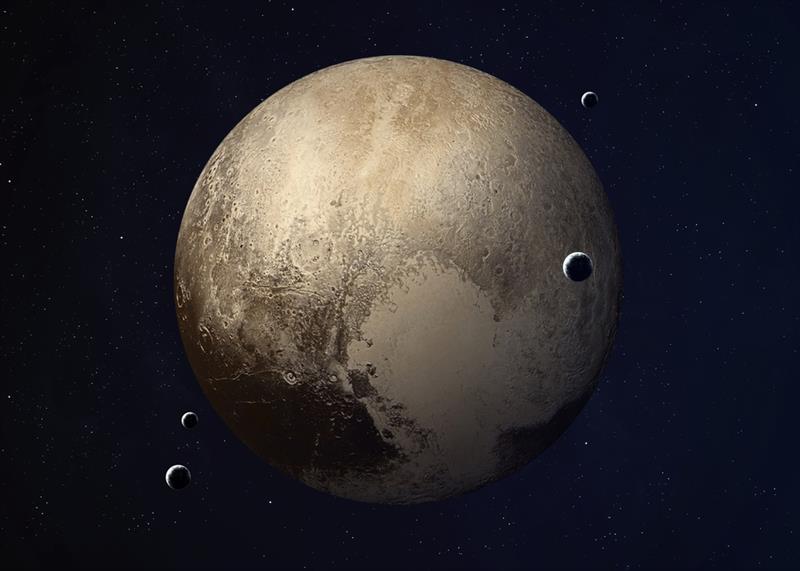
According to the data, obtained by NASA space probe New Horizon, there is an at least 100 km deep liquid ocean under 300 km thick ice cover on Pluto.
It appears that salt content of the Pluto ocean reaches 30%, which is about the same as that of the Dead Sea on Earth. Yet there are still no data about if anyone inhabits this subglacial ocean.
It appears that salt content of the Pluto ocean reaches 30%, which is about the same as that of the Dead Sea on Earth. Yet there are still no data about if anyone inhabits this subglacial ocean.
#5 Venus was once inhabited
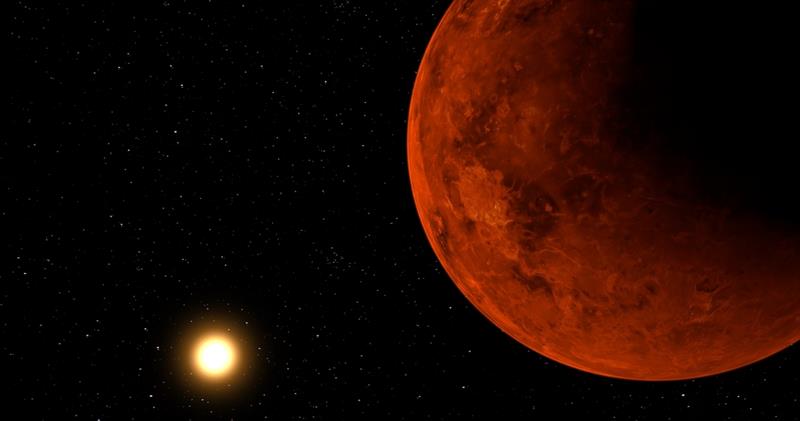
Today Venus is the hottest planet of the Solar system, which of course means no liquid water on it. Still, more than 4 billion years ago the planet had liquid oceans on its surface. They had existed for about 2 billion years. This gives a reason to assume there can be life on the second planet from the Sun.
#6 Rings and satellites of Saturn are younger than dinosaurs
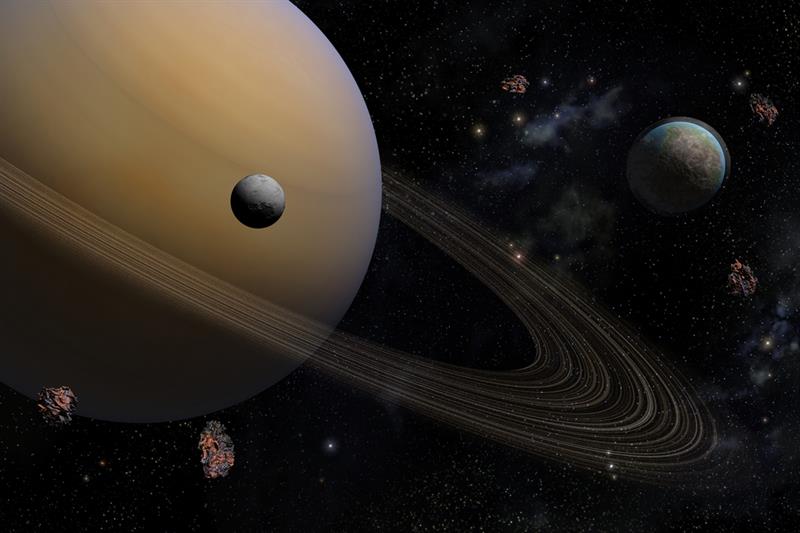
As you may probably know, 62 satellites and several rings consisting mostly of frozen water are revolving around Saturn. A theory supposes that the planet once had more satellites, but they collided with each other, forming bigger moons.
The data obtained in 2016 suggest that the rings were formed much later than the planet 4 billion years ago. By means of computer simulation it was found that Saturn rings and all its satellites, except Iapetus and Titan, appeared when Earth was inhabited by dinosaurs.
The data obtained in 2016 suggest that the rings were formed much later than the planet 4 billion years ago. By means of computer simulation it was found that Saturn rings and all its satellites, except Iapetus and Titan, appeared when Earth was inhabited by dinosaurs.
#7 The 9th planet can again appear in the Solar system

In January 2016, by means of computer and mathematical simulation it was found that the Solar system may probably have another planet. By the assumption of Konstantin Batygin and Michael Brown (responsible for depriving Pluto of a planet's status) the supposed object is located 20 times further from the Sun than Neptune.
By all appearances the planet's diameter is 2-4 times wider than Earth and it is about 10 times heavier. Meanwhile, the planet has no name - it can be named only after its existence is confirmed.
By all appearances the planet's diameter is 2-4 times wider than Earth and it is about 10 times heavier. Meanwhile, the planet has no name - it can be named only after its existence is confirmed.
#8 There can be an inhabited planet around the Sun's nearest star
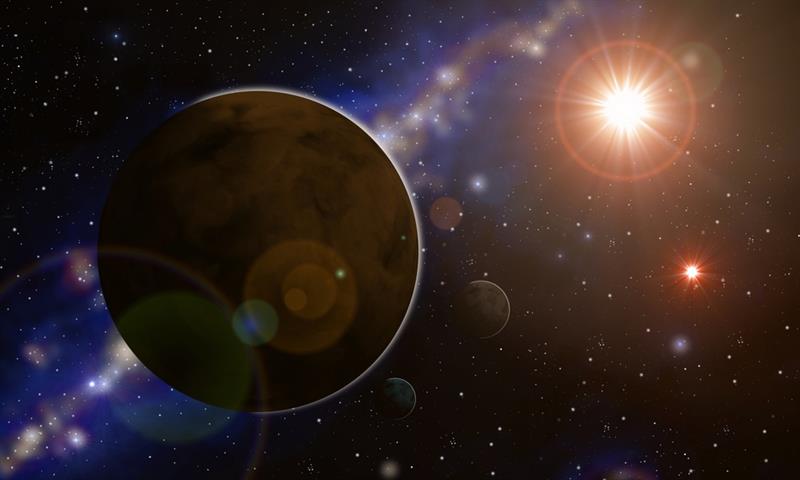
In August 2016, scientists announced the discovery of Proxima b planet, revolving around Proxima Centauri star. The planet's orbital period equals about 11,2 earth days and its surface temperature is about -40°F(-40°C).
The planet revolves around the star in a so-called habitable zone, which means it can be suitable for life. Simply put, the distance between the planet and the star supposes that water on it can exist in liquid form. If magnetic field and atmosphere are found on this planet, we can fairly count on the presence of living organisms there. Which ones? This question is still to be answered.
The planet revolves around the star in a so-called habitable zone, which means it can be suitable for life. Simply put, the distance between the planet and the star supposes that water on it can exist in liquid form. If magnetic field and atmosphere are found on this planet, we can fairly count on the presence of living organisms there. Which ones? This question is still to be answered.
# 9 Scientists obtained evidence of black holes' existence
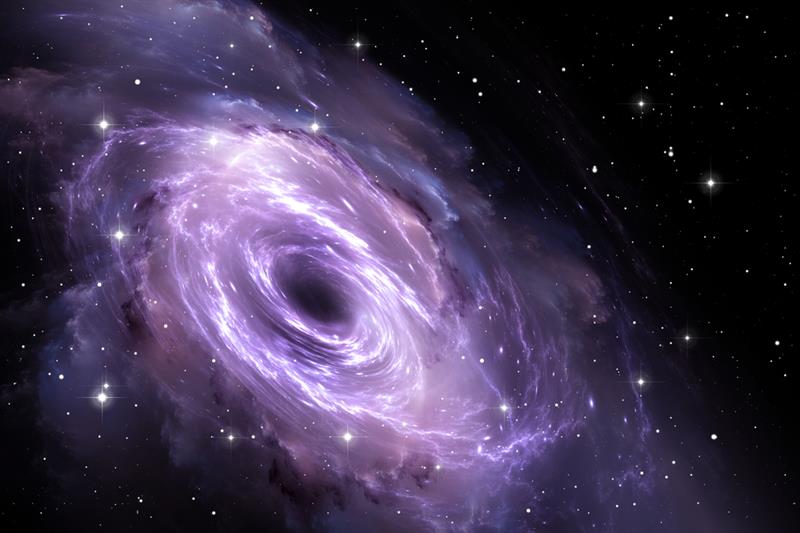
For its 100th anniversary Einstein's relativity theory received a truly priceless gift - a discovery that proved one of its main postulates.
In February of 2016 scientists discovered gravitational waves, predicted by the greatest physicist of the 20th century.
For the first time this clearly confirms black holes exist. Besides, if scientists manage to detect waves, formed as a result of the Big Bang, they will be able to finally understand the mechanism of the Universe's origin.
In February of 2016 scientists discovered gravitational waves, predicted by the greatest physicist of the 20th century.
For the first time this clearly confirms black holes exist. Besides, if scientists manage to detect waves, formed as a result of the Big Bang, they will be able to finally understand the mechanism of the Universe's origin.
Do you often look into the stars and think about space? Do you think space exploration is important? Share your views in the comments!
More on QuizzClub.com:
- A unique footage from space: a planet-sized object flew through the Sun
- Only true erudites know the hidden meaning of these words
- 11 most unusual sights of the world you definitely don't know about
Share this article if you find it interesting!
What are your thoughts on this subject?
34 Comments

Johnny Gio
AS A YOUNG BOY I WAS ALWAYS INTERESTED IN SPACE, ONE DAY MY MOTHER FOUND ME READING 'SKY AND TELESCOPE' MAGAZINE' SO SHE TOLD ME I SHOULD TAKE UP SPACE, SO I HAVE EVER SINCE THEN BEEN TAKING UP SPACE.

Elsy O. Stromberg
Satish Chandran, The heat wasn't enough to melt it.

Satish Chandran
Mercury,being nearest to Sun,How It could not have melted?

lls
...did not know about #6...how about that!

suejolley
Anyone who thinks they know when the planets were formed are living in cloud cuckoo land.

Linda Spreng
Steven Ernest Scott, And you know all this how?? Perhaps Stephen Hawking paid you a visitation??

Sue Ebisuzaki
I admire the people who are involved in space study and visit. On the other hand, I wonder if it would be better to spend all the money on conquering poverty, etc on earth.

Kent-Sue Parsons
The title of the article refers to FACTS, but the content repeatedly uses terms like “if scientists manage,” “supposes that,” “probably,” “a theory supposes,” “assume,” “it appears...yet there are still no data,” “allegedly,” etc. The rest of the title may be accurate “PROVE WE KNOW NOTHING ABOUT THE UNIVERSE”

Keshav Nrugham
Im sitting in my Himalaya home listen to Mike Oldfield singing : I rather be here than fly through space ;-)

RainingStars
Steven Ernest Scott...Really?? And how would YOU know that there isn't Life, on other planets? Have YOU been to other Planets? No, so there could be Life, on other Planets, that are not within Our Solar System. Also, no one knows the actual age, of the Earth 🌏, so how would you know that it's only 7,501 years old? Were you there, when G_d supposedly created the Earth? I, highly, doubt it!
Scientists have calculated that the Earth is 4.54Billion years old, so wherever did you come up with 7,501 years old? I think you're off, by a few Billion years! Sheesh! 🤷🏻♀️
RainingStars
The reason why Venus, and not Mercury, is our Hottest Planet, is explained here:
Interesting, to say the least!
http://www.physlink.com/education/askexperts/ae425.cfm

Ramiro Alvarado
Good stuff.

Patty Ludwig
I have believed in life in other worlds . What I can’t understand is why we are not connected to them anymore. I believe they once were here, and that’s the mystery of the Mayan culture and how extremely advanced they were.

Thyamagondlu Siddagangappa Ramaiah
Very much interesting and curious.

Michael Doherty
David Roy - Venus is hotter than Mercury because it's atmosphere holds in the heat. Mercury has no atmosphere.

John Puza
It’s very interesting but on the other hand it is really over my head!!!